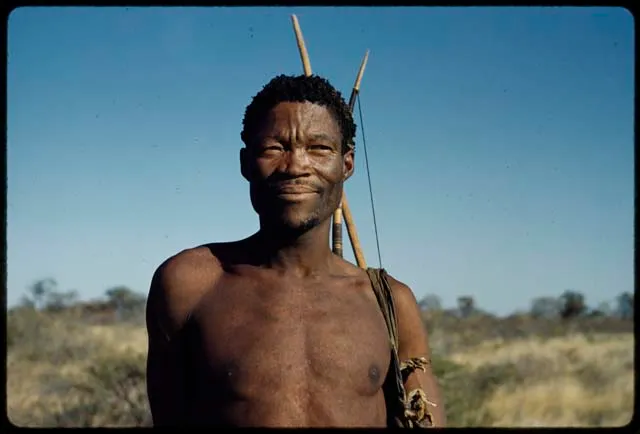
This post was inspired by the excellent “why I can’t stop thinking about Papua New Guinea and what I think everyone should know about it”
When you mention the Bushmen of the Kalahari desert people may say…well, usually nothing.
They may wince at the word ‘bushmen’ as probably pejorative, and take a step closer to make sure you keep your voice down1.
Perhaps they recall a mention in Sapiens, or a podcast about rucking or something. But maybe, like me, they watched the 1980 South African cult comedy The Gods Must Be Crazy. I was beguiled by the narration in the opening sequence:
Where any other person would die of thirst in a few days, they live quite contentedly in this desert that doesn’t look like a desert. They know where to dig for roots and bulbs and tubers, and which berries and pods are good to eat. And, of course, they know what to do about water.
They must be the most contented people in the world. They have no crime, no punishment, no violence, no laws, no police, judges, rulers, or bosses.
They’re very gentle people. They’ll never punish a child or even speak harshly to it, so, of course, those kids are extremely well-behaved, and their games are cute and inventive.
When the family needs meat, the hunter dips his tiny arrow in a brew that acts as a tranquilizer, so when he shoots a buck, it only feels a sting, and the arrow drops out.
Was this all true I wondered? I had recently been diagnosed with a chronic illness, and everything I read about staying healthy (eat more vegetables, eat different vegetables, get more fiber, more vitamin D, more sunlight, exercise 10,000 minutes per week, reduce stress, carry heavy things, don’t read the news, have a large circle of loving friends and family, etc) seemed to point straight back to one thing: that I should be living like my pre-agriculture ancestors lived. I was also growing more disillusioned with the world around me: the noise, the ugliness, the mining of addictions for profit, the destruction of nature, growth for its own sake.
And here before me was an edenic way of life that seemed to address all these in one go. Who were these phlegmatic people with their remarkable click language and poison arrows? Did they really live this way?
To answer these questions I fell down the deepest and most interesting rabbit hole of my life.
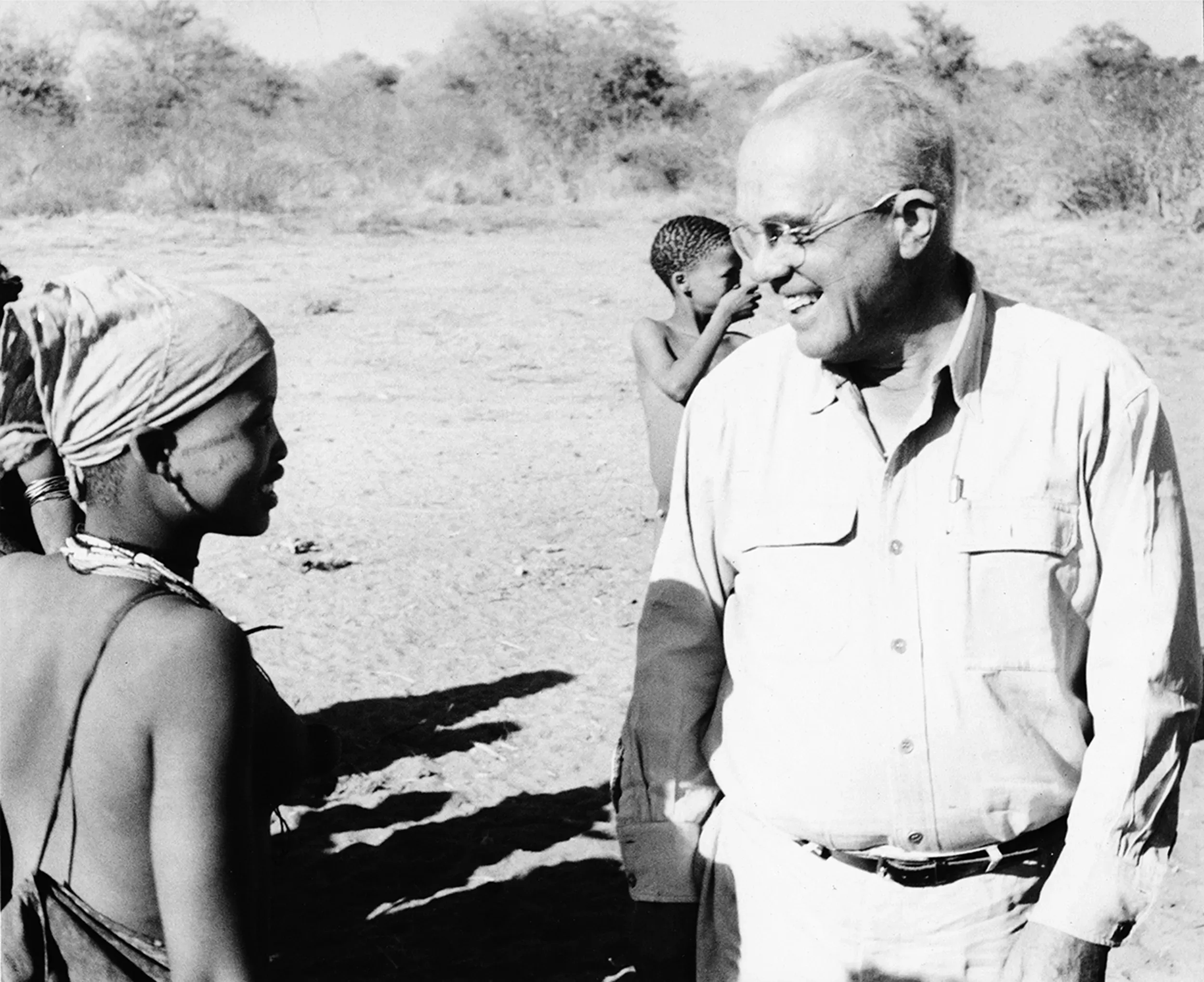
The Gods Must Be Crazy was inspired in part by a wave of interest in the people of the Kalahari, and that wave was started by Laurence K. Marshall.
Marshall was co-founder and CEO of Raytheon Corporation, today one of the world’s largest military equipment makers. He spent the years of WW2 pedal-down, making the radar technology that helped the Allies win the war. He retired in 1950 and decided to spend time with the family he hadn’t had a full weekend with, let alone a vacation with, since before the war.
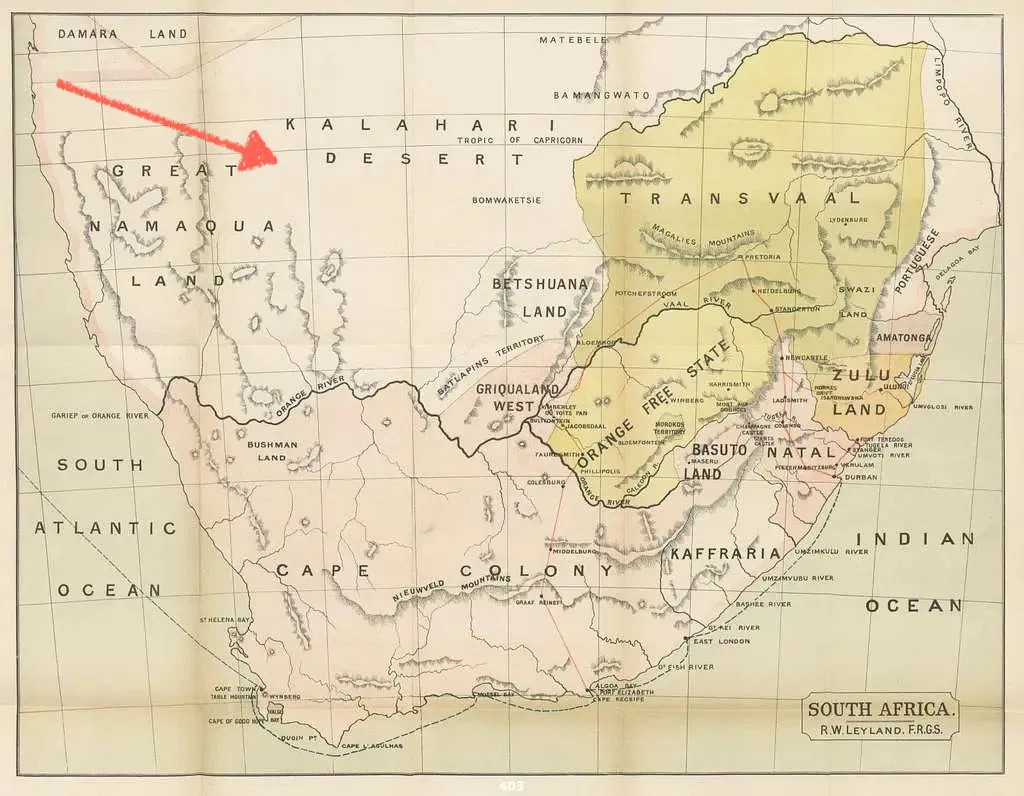
But he wouldn’t do it sitting around. An active outdoorsman and lover of wild places, Laurence rolled out a map and found a place that showed no towns or roads, one of the last unexplored areas on Earth: the 120,000 square miles of the central Kalahari. Using his wealth, connections and great skill as an organizer, he put together a crazy expedition whose aim was to find and study the fabled bushmen, about whom little was known.
Despite offering to pay the salary and expenses of a credentialed anthropologist, no one took him up on it. So he set off with his wife Lorna, his teenage children John and Elizabeth, a couple of other academics, a few camp helpers, and interpreters.
To cut a long story short: after a punishing trek through the roadless desert, they found and befriended a band of Ju/hoansi2 bushmen. The Marshalls would spend 6 weeks with the band on this first trip, but they would return seven more times over the next decade to continue documenting them and other bushmen groups.
Young John Marshall was in charge of the film camera. He learned in the field how to set up his shots by reading the instructions on the back of Kodak film boxes. He would shoot over 1 million feet of film and make 23 films over this career in the field and win multiple awards.
Elizabeth Marshall would go on to write The Harmless People, about their expeditions. It was critically acclaimed, widely popular and still holds up as a great read.
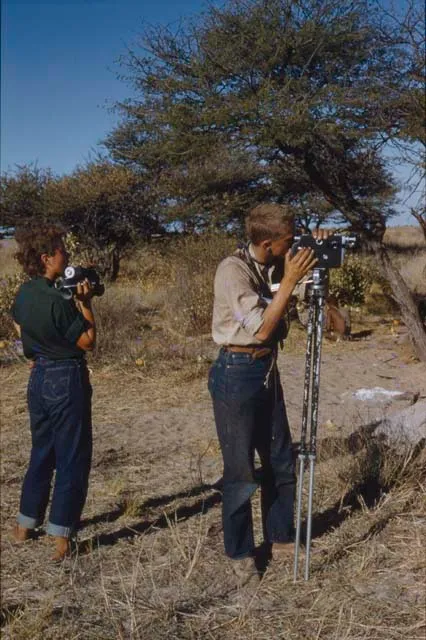
Lorna Marshall proved a remarkably astute and sensitive ethnographer. Her work ignited an interest in direct study of hunter-gatherers and inspired the next generation of anthropologists to do just that.
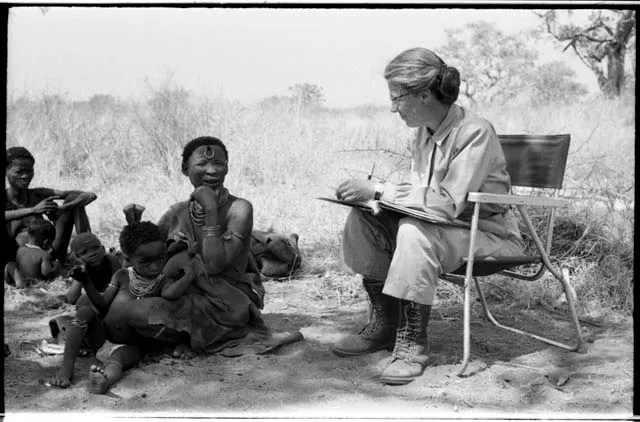
The Kalahari is one of the most unforgiving environments on earth. The sun is scorching. The nights are literally freezing. The landscape is sand and grass, with few trees and little shade. Every damn plant has thorns. There is little or no standing water for months at a time. There are lions and leopards and hyenas and all the game animals run away from you. And yet within these parameters, the bushmen thrived.
The Marshalls documented a generally contented people, with strong kin groups, deep belonging to group and place, with music, comradeship, and happy children. They obtained the necessities of life with less work than we do today and had more leisure time. They didn’t suffer major nutritional deficiencies. Suicide was virtually unknown. They cared for their sick; they venerated and cared for their old. They had no chiefs or kings or big men. Their stories had no heroes. They did not make war. They did not raid or enslave each other. Each gender had its roles but men and women were equal. As a rule, they were deeply patient and stoic. They prized harmony and were quick to forgive. They lived lightly on the land. They slept when they were tired, they got up when they wanted, they left a place when it suited them to do so.
In short, the bushmen were not a people that needed civilizing.
Below are a handful of things I find fascinating about their way of life. I focus more on their social technologies, and less on other amazing things like how they found water, how they made arrow poison, or how a hunter might dissuade a lion from stealing his kill by walking up to it and calmly explaining that it was not the lion’s meat.
Note: the following did not apply equally to all Kalahari Bushmen groups, but there were broad similarities between them. I refer to groups by name when possible.
Food
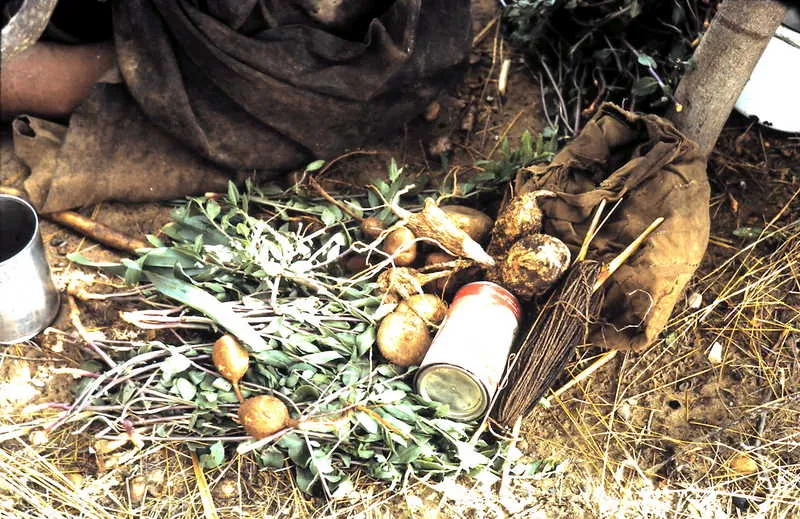
Can you name all the plants that grow in your local park? The people of the Kalahari had vast encyclopedic knowledge for everything that grew and moved in their environment, all of which was named.
Most of their calories came from plants, and they ate a lot of different kinds. One group was documented to eat about 80 types of plants. That’s more than twice the number on my menu.
Women were the primary gatherers but men could and did assist with the gathering. As one woman said of gathering: ‘That is what women are made for; men are made to bring meat.’
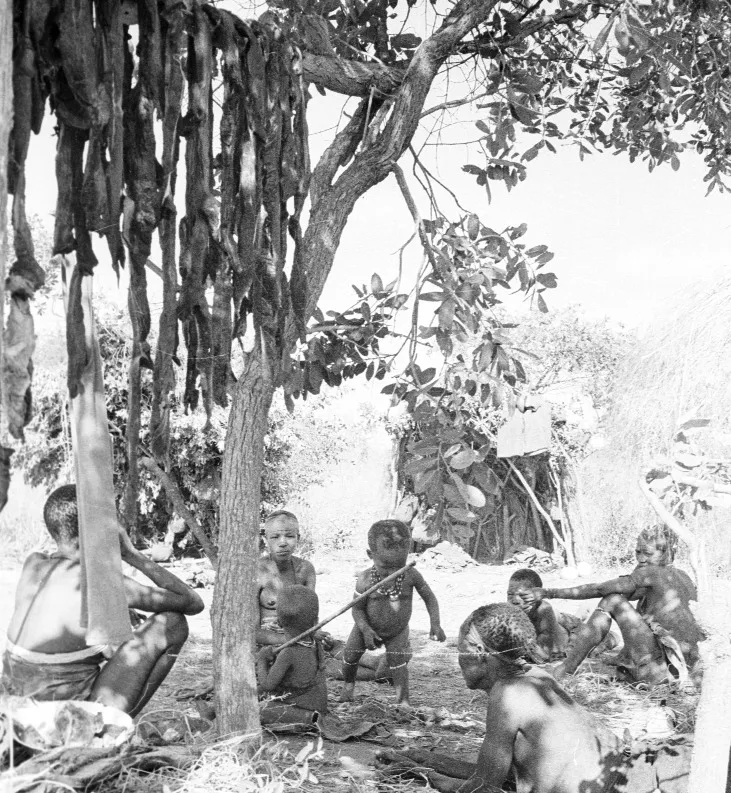
Meat was the ‘strongest’ of all the foods for its ability to nourish and be just plain delicious.
Anyone could get small game, but big game hunting was the province of men. In fact, a man must successfully kill a buck in order to qualify for marriage. It was men’s chief topic of interest and for most, their passion.
Their quarry was the large hoofed animals like kudu, eland, springbok, giraffe, gemsbok, wildebeest and others. They would creep up and shoot the animal with a poisoned arrow. The arrow need only break the skin for the poison to start its work, and the animal would die within hours to days.
In that time the hunters would track it with almost supernatural skill. Good trackers could tell for example which wildebeest in a herd was theirs from a confusion of tracks that would look like plowed up sand to us.
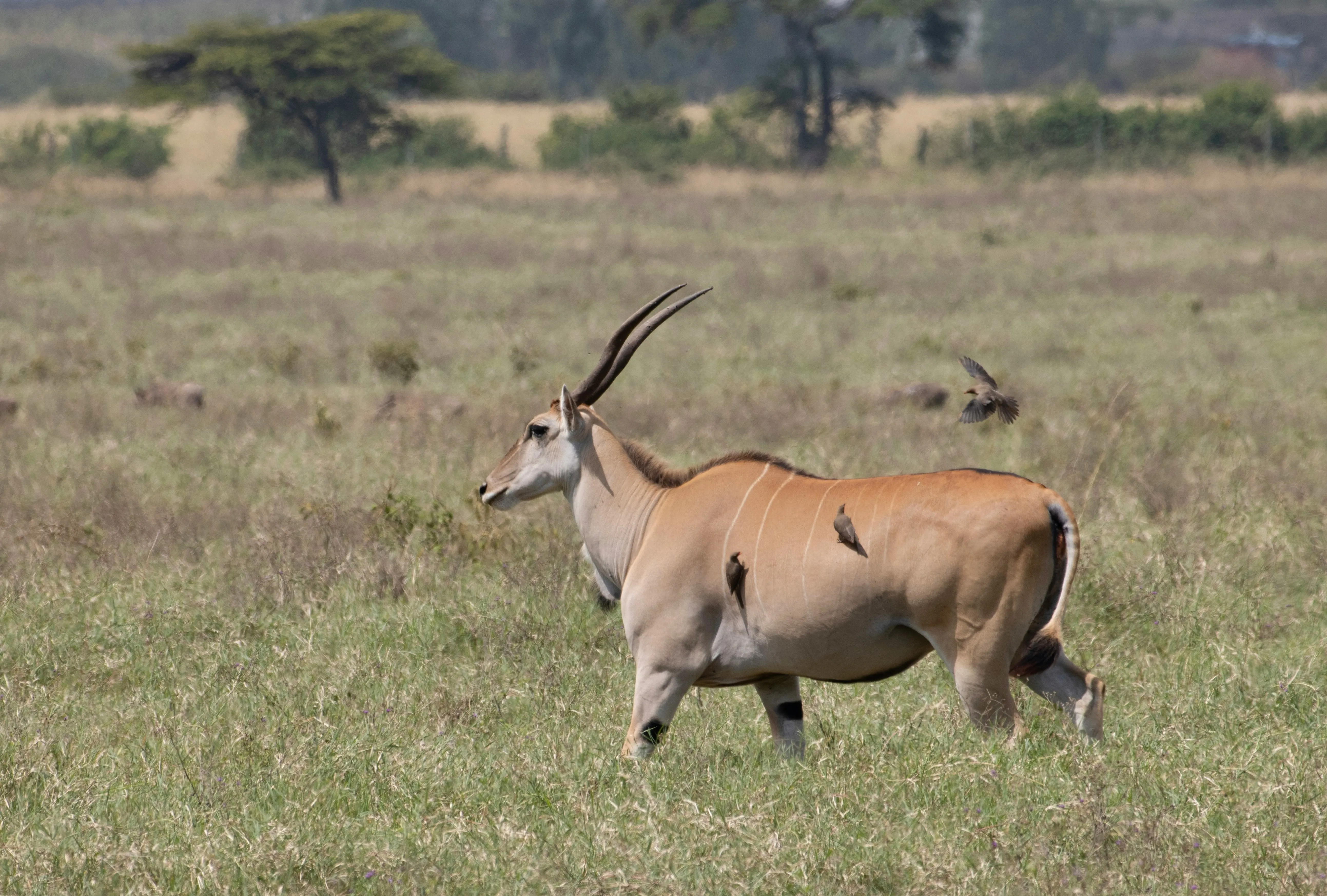
They loved meat and ate as much as they could get. To quote Lorna Marshall:
…an eland was killed, and the hunters were sighted moving toward the encampment in a dark, lumpy, bobbing line in the golden grass, their carrying-sticks loaded with meat. […] Some people ran toward the hunters, others crowded together at the edge of the encampment, some danced up and down, children squealed and ran about, the boys grappled and tussled together. I venture to say no women have been greeted in this manner when they returned with vegetables.”
Sharing food
Most plant food was owned by the person who gathered it. As the main gatherers, women fed their husbands and relatives according to their own pleasure. High-calorie plant foods however, like manketti or tsi nuts, were shared according to strict rules, as was big game meat.
Meat ‘belonged’ to the person whose arrow had killed the animal, not the man who shot it.
“There is much giving and lending of arrows. The society seems to want to extinguish in every way possible the concept of the meat belonging to the hunter.” — The !Kung of Nyae Nyae, Lorna Marshall
Bushmen were fiercely egalitarian. Having the best hunter in the band always be the one to share meat might cause status imbalances and jealousies that would work like arrow poison upon the fabric of the band. Thus the old, the infirm, bad hunters, and women could provide the killing arrow, and take their turn as the distributor of the all-important meat.
Meat sharing was a demanding official task, watched closely by the band. Large pieces would be given to other hunters or family members who would then subdivide and redistribute according to their own obligations. In this way, everyone shared in the bounty of a successful hunt.
Sharing other things
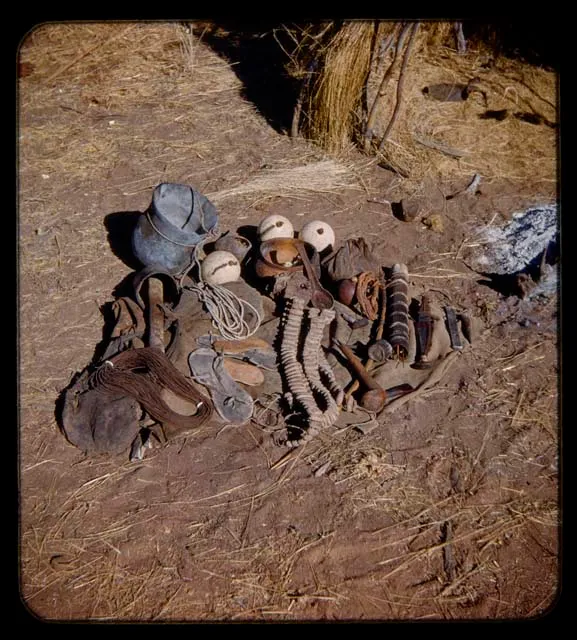
Bushmen had an extensive system of gift-giving and obligations for other items too. This was not barter. The Ju/hoansi for example saw direct trade as undignified and too likely to stir up resentment. Instead they used a system they called hxaro: I give you something today and you give me something later. Direct requests for an item were very hard to refuse, but it meant the requestor had to repay at some future date.
Anthropologist Richard Lee tells this story as he’s trying to understand hxaro.
“If you gave me a big thing and I gave you a small thing, would that be all right?”
“Yes, it would be all right,” replied !Xoma patiently.
“And if you gave me a small thing and I gave you a big thing?”
“That would be very good, if it is your heart,” replied !Xoma.
I seemed to be getting nowhere. I tried another tack. “Let’s say you gave me a spear and I gave you three strings of ostrich-shell beads, would that be all right?”
“Yes it would,” replied !Xoma.
“What if I gave you two strings of beads?”
“Yes, that would be all right.”
“One string?”
“Yes.”
“What about four or five strings?”
I was getting desperate.
!Xoma broke into a broad smile. “I see what your problem is! […] you don’t understand our way. One string, five strings, any return would be all right. You see, we don’t trade with things, we trade with people!” — The Dobe Ju/hoansi, Richard B. Lee
Some people had few hxaro partners while others had dozens. What made one ‘wealthy’ was not the number of things you received. After all, too many visible goods would get quickly requested away from you. Instead it was how much you caused gifts to circulate within the community. In short, wealth was how many friends you had.
Like kinship networks, hxaro was insurance: it gave people places to go to if they wanted to leave their band for a while, and gave them other people to rely on when food or water in their area got scarce.
The Marshalls gave each woman in the first band they studied a string of cowrie shells (which did not exist in the Kalahari). When the Marshall’s returned the next year, hardly any shells remained with the band, and they found the shells had been hxaro’ed out across hundreds of square miles of territory.
Harmony and conflict
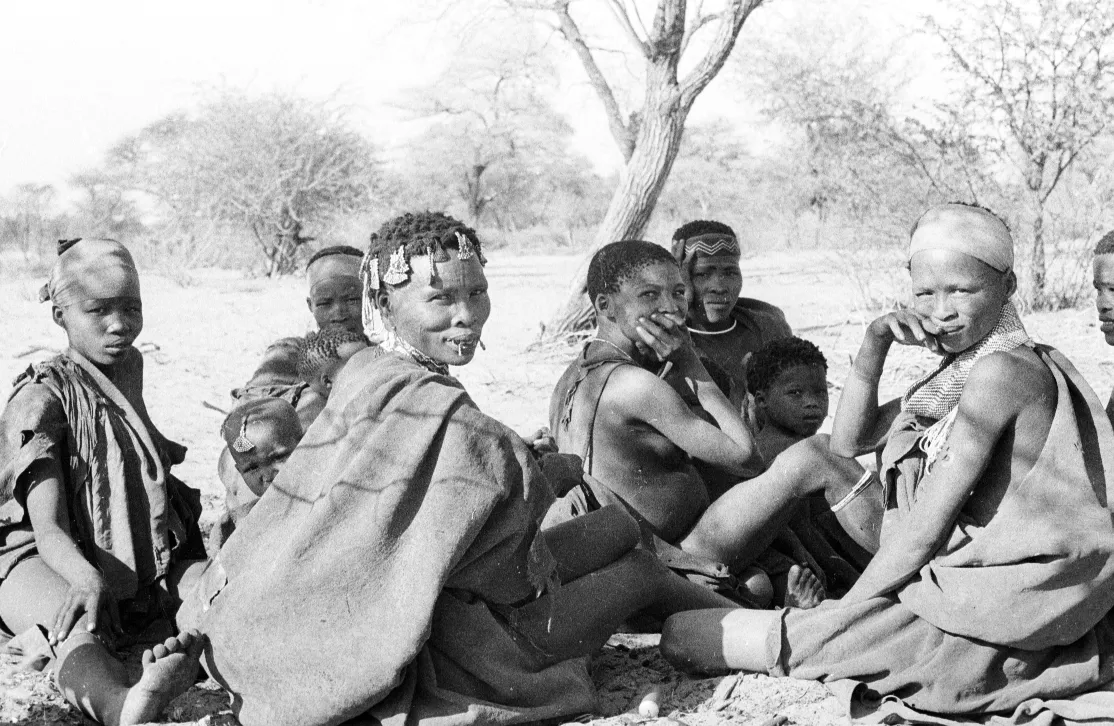
Bushmen have been called the most talkative people in the world. The band talked endlessly about plans, weather, stories and so on, but also people’s character and actions. This gossip acted as a social credit system and a check on bad behavior: men who were known as fighters for example were considered poor marriage material.
Jokes and teasing were constant. It leveled inflated egos and gave a way to criticize without direct confrontation. A person skilled in something was expected to be self-deprecating and humble. A successful hunter for example might get viciously teased for his dumb luck, for the ‘worthless’ or ‘skinny’ animal he killed.
“But,” I asked, “why insult a man after he has gone to all that trouble to track and kill an animal and when he is going to share the meat with you so that your children will have something to eat?”
“[Because] when a young man kills much meat he comes to think of himself as a chief or a big man, and he thinks of the rest of us as his servants or inferiors. We can’t accept this. We refuse one who boasts, for someday his pride will make him kill somebody. So we always speak of his meat as worthless. This way we cool his heart and make him gentle.” — The Dobe Ju/’hoansi, Richard B Lee
Everyday violence was remarkably rare. The bushmen expected self-control, stoicism, forgiveness and generosity from each other. These were not inborn but were learned and practiced.
“[They] are strongly set against violence, and accord it no honor. To have to fight is to have failed to find a solution by wiser means. As one man remarked, ‘Fighting is dangerous—someone might get killed.” — The !Kung of Nyae Nyae, Lorna Marshall
When people did fall out, the band would seek to repair the rift with discussion in which anyone could partake. With trance dances, healers would exorcise ‘star sickness’ from the band, that invisible force that made people jealous and angry and stingy.
If two men so forgot themselves as to come to blows, their poison arrows and weapons may be quietly removed. They may be allowed to have it out for a bit (better than let things simmer and turn truly ugly) before the band interrupted and separated them.
The hunter’s feast of the G/wi bushmen was another piece of amazing social technology. Two men who had quarreled but had no face-saving way of moving past the lingering bitterness would be invited to a feast of a recently killed animal. Etiquette demanded politeness, and everyone had to act as if they were having a good time. The two men would be placed next to each other. While acting out the enforced civility and kindness, they could allow it to become genuine once more.
If all else failed, the upset people could always leave for another band whenever they chose, and stay for days or months in order to cool off.
Marriage
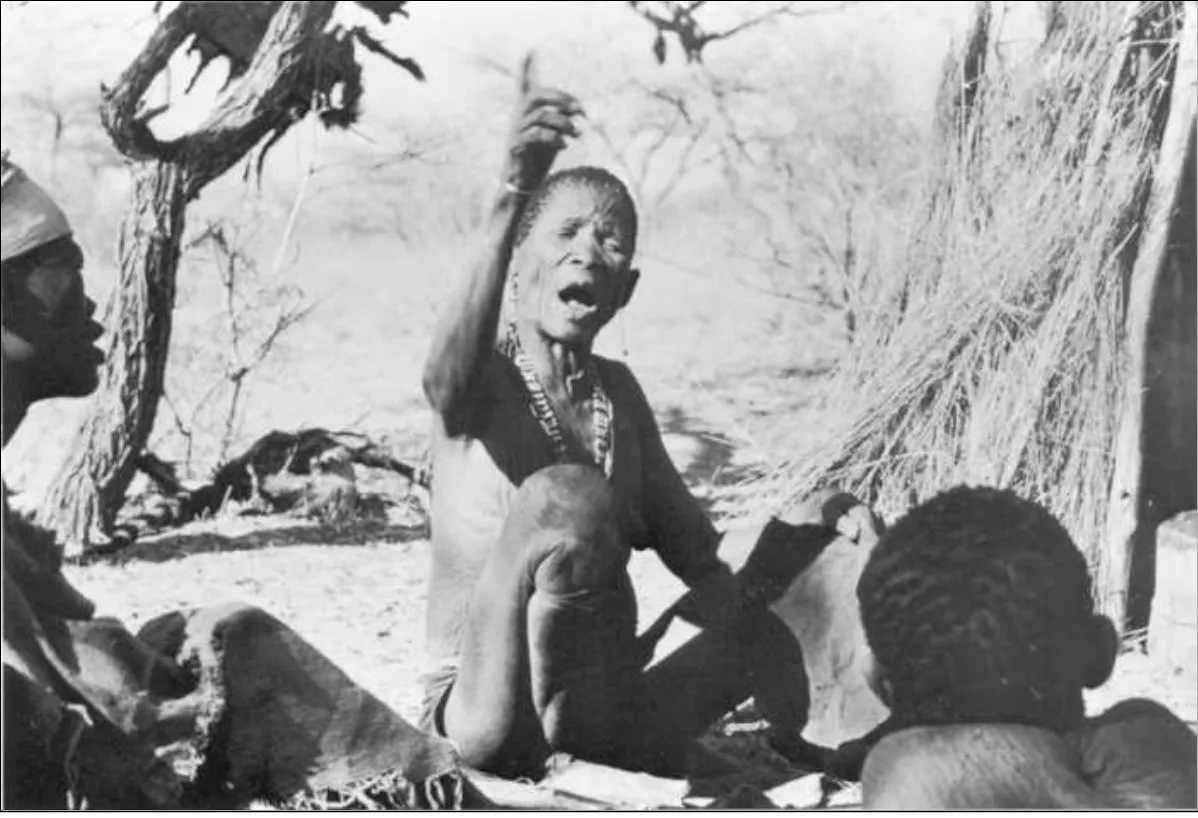
Marriage enriched the bride and groom with each other’s rights and kinship networks. First marriages were arranged, usually between a prepubescent girl and a young man. They were forbidden from consummating the marriage until after the girl’s first menstruation, which was usually in her late teens (much later than in fatter, sedentary cultures). After the ceremony the groom would ‘move in’ next to his in-laws and hunt for them and learn advanced hunting techniques from his father-in-law. The girl would continue sleeping in her parents’ hut as long as she liked and until she was comfortable living with her husband. Rape and domestic violence were prevented by the closeness of the parents and the rest of the band who would intervene if needed.
Girls could refuse to marry the chosen husband. Either partner in a marriage could decide to divorce, and after a discussion and attempted resolution with the rest of the band, the marriage was dissolved. A woman could decide to marry a man of her choosing or remain single the rest of her life.
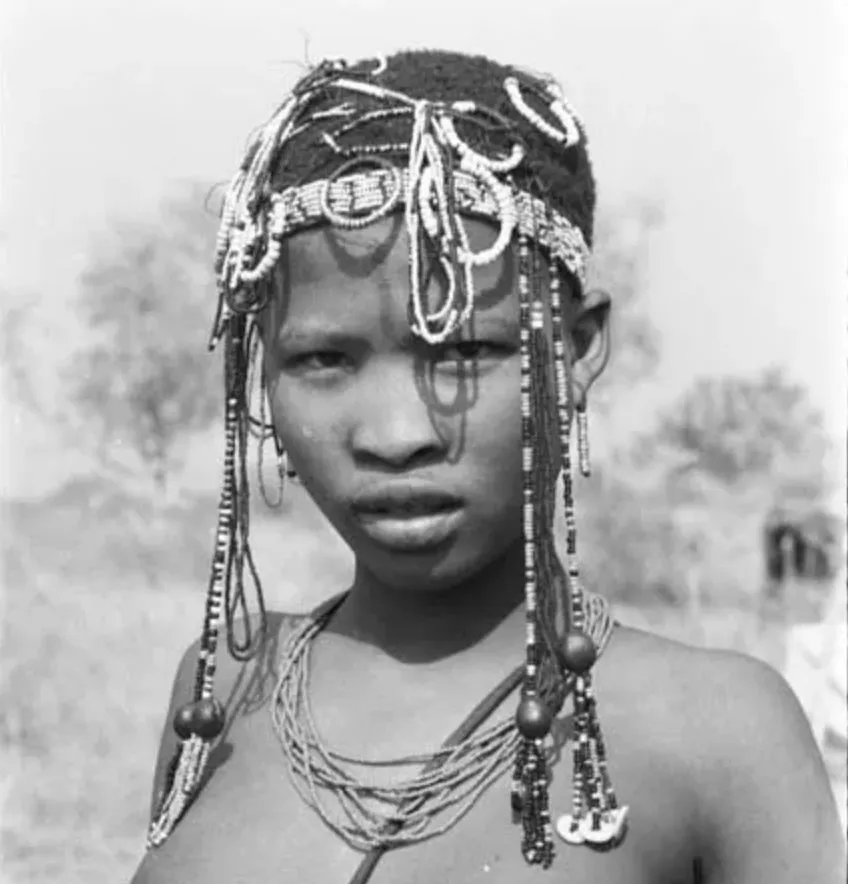
Polygamy existed but was rare.
“All but one of the polygamous husbands appeared to be rather disappointed with their lot and privately expressed the view that it was a burdensome and hazardous form of marriage because of the threat of disruptive jealousy among the co-wives.” — Hunter and Habitat in the Central Kalahari, George B. Silberbauer
One researcher reports a woman with two husbands: she got fed up with the first and left him for his friend. They went off and the first man became sad, having lost both wife and friend. The other band members discussed the situation at length and when the woman and the friend returned, the band suggested a novel solution: she could try being married to both. They thought it over and all three agreed to give it a shot. The arrangement lasted for years afterward (the eventual result was not recorded anywhere I could find). This shows the Bushmen’s ability to adapt to novel situations and thoughtfully consider the best course of action, though unprecedented.
Bushmen had stricter taboos against intermarriage between even distant cousins than we do, which helped preserve their genetic diversity. Natural fertility was low and women tried to space children 3-4 years apart to ensure each survived.
Children
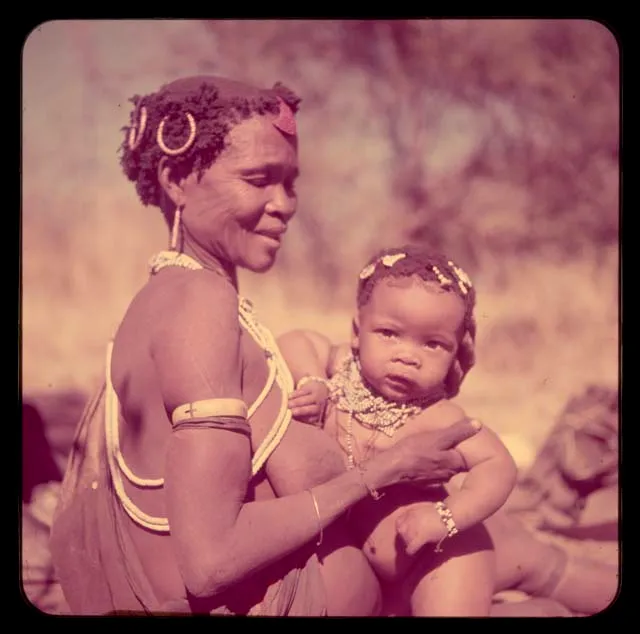
Children of both sexes were equally welcome. They were carried most everywhere and were nursed until around age 4. They were a source of delight, and the whole band helped keep an eye on them and raise them.
Childhood was seen as a happy, carefree time. Children were indulged and free from nearly all labor demands until they came of age. Physical punishment was so rare that some researchers reported none at all over months or years with a given band. Irritability in parents was acceptable but open rage was heavily disapproved of.
Bands
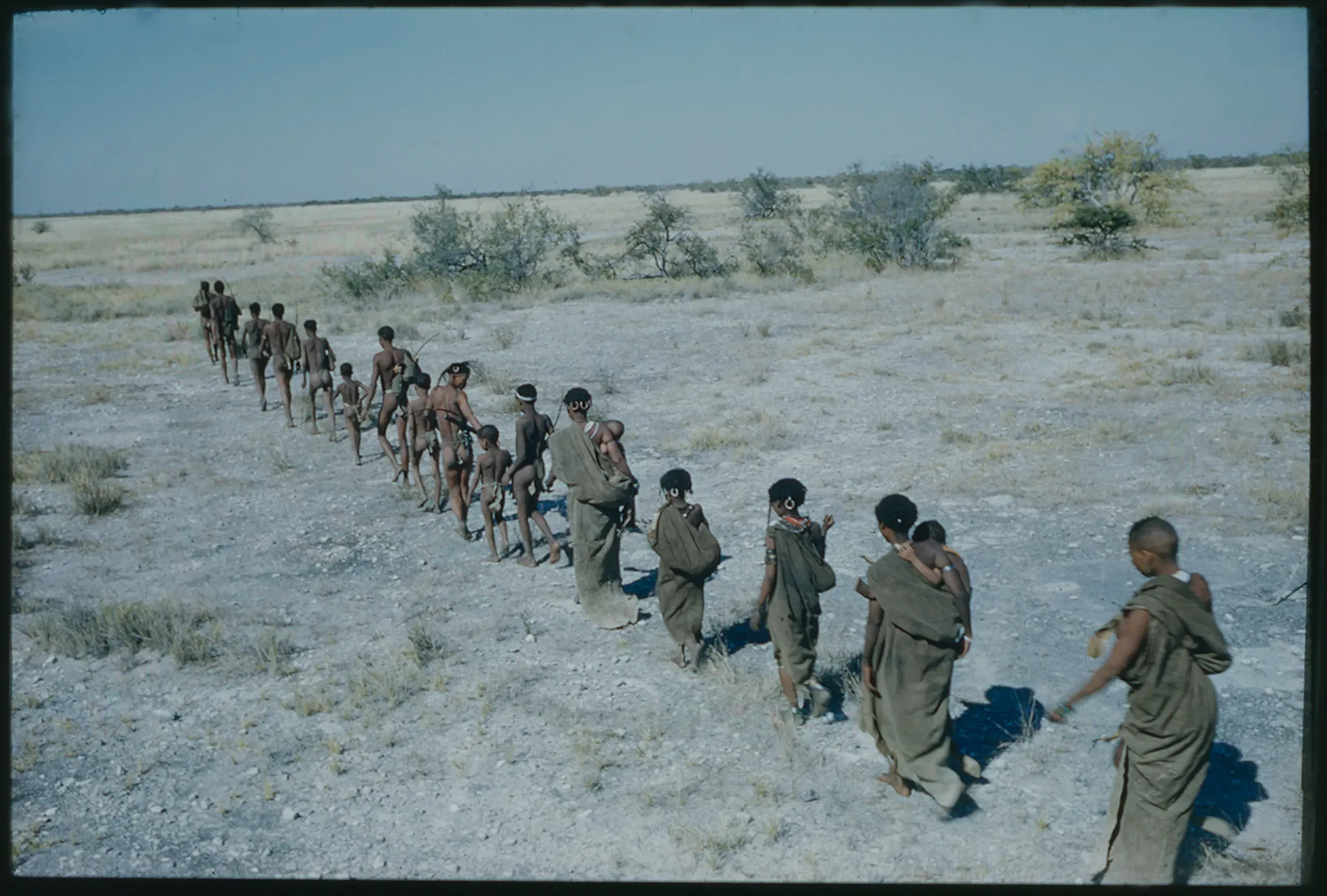
Band size depended on the available food and water but was anywhere between 10-50. Band membership was fluid, and members could join other bands, found new ones, go visiting friends or relatives, or leave because of disagreements.
Bands would disperse into family units during the hard months and come together during the bountiful ones. And many bands would come together when food was plentiful, as many as 200 people in a good food season. Sometimes one band would send word to another that they had good rain and a lot of plant foods and would the other like to join them for a while?
These were joyous times of seeing old friends, meeting potential mates, sharing food and stories and of course, hunting trips for the men.
Leadership
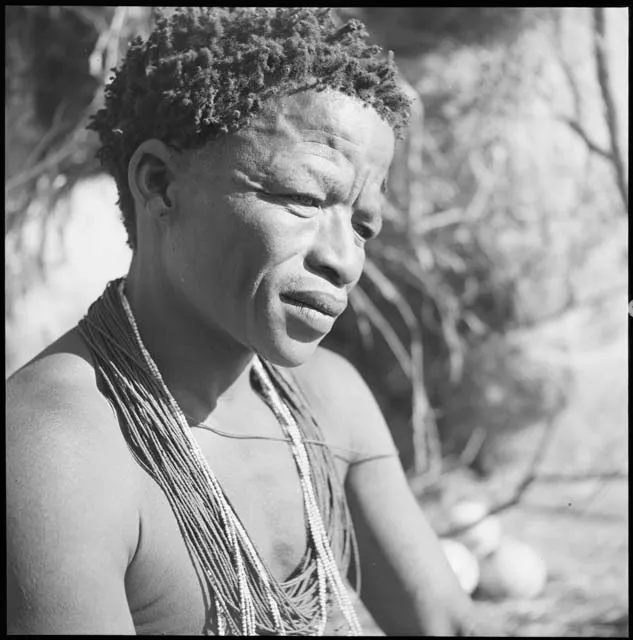
Bands had no chiefs. They did have a nominal ‘owner’: the original founder of a band or their descendants, but this person’s only role was the formality of giving permission for outsiders to ‘drink their water’ while in their territory.
Bands did have natural leaders who were not necessarily the band owner and who acted more like a spokesman. They led by consensus and had no power to coerce or enforce their will. They enjoyed no extra privileges or status, and if anything did more work as servant-leaders.
Work
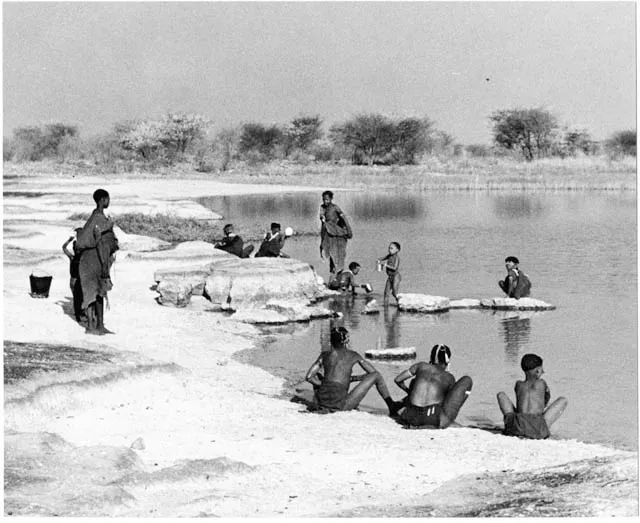
Most estimates of how long bushmen spent in quest of food were about 20 hours or less per week. If a person had gathered or hunted enough food for a few days or didn’t feel like working that day, they didn’t. There were no fixed schedules beyond the natural rhythms of season and food.
Bushmen possessions were few (often less than 20 items). They preserved no food because the land provided. Richard Lee took exhaustive measurements of Ju/hoan calorie intake during the third year in a row of the worst drought in the region’s recorded history. Despite a general preoccupation with food, they lived well above subsistence level. While settled peoples outside the Kalahari were starving and their cattle were dying, the bushmen were living well and taking it easier than I do!
Relationship and Names
Every person had either a ‘joking’ or ‘respect’ relationship with others. Joking relationships were informal and easy-going, as between two friends or between a child and their grandparents. Respect relationships were more formal, as between a person and their parents or their in-laws.
The bushmen had only a few dozen names for each gender and so there was a lot of overlap. The cool thing is that a name automatically linked that person into a joking relationship with everyone else with that name. So traveling to some distant band, or in a larger group of strangers, someone need only find those of his same name to instantly have a sort of surrogate family. What a way to make people feel like they belong!
So was The Gods Must Be Crazy accurate? It was romanticized, often inaccurate and sometimes fanciful. And yet…it got the broad strokes right about how the people of the Kalahari lived prior to the 1980s. Instead of being ‘solitary, poor, nasty, brutish, and short’, their lives had a richness only recently matched (in some ways) in modern wealthy nations.
The desert was their bulwark, but it was also their crucible. And that’s exactly why I can’t stop thinking about them: they were not just successful in spite of their limitations, but largely because of them. ‘Constraints breed creativity’ they say. Well, Bushmen creativity came up with simple, workable, human systems that allowed the better angels of their nature to win out more often than the devils. It was still hard and it wasn’t perfect, but they were, as one anthropologist put it, ‘the original affluent society’.
But the constraints keeping it all in balance would soon change. Starting even during the time of the Marshall expeditions, the Bushmen began more and more to be resettled into towns, farms, and reservations. To live and travel over their old lands became criminal trespassing, hunting became illegal poaching.
Far from affluent, they found themselves on the bottom rung of the global economic system. The speed run in a single generation from stone age to information age introduced them to many new and amazing technologies. It also brought dependence, sedentism, political marginalization, soaring rates of violence, malnutrition, suicide, addiction and disease. Their old networks fell apart and their ways abandoned or forgotten. By the time TGMBC came out, no Bushmen groups lived in the old way (the lead actor had never actually hunted before). Nor did many want or know how to go back even if they could.
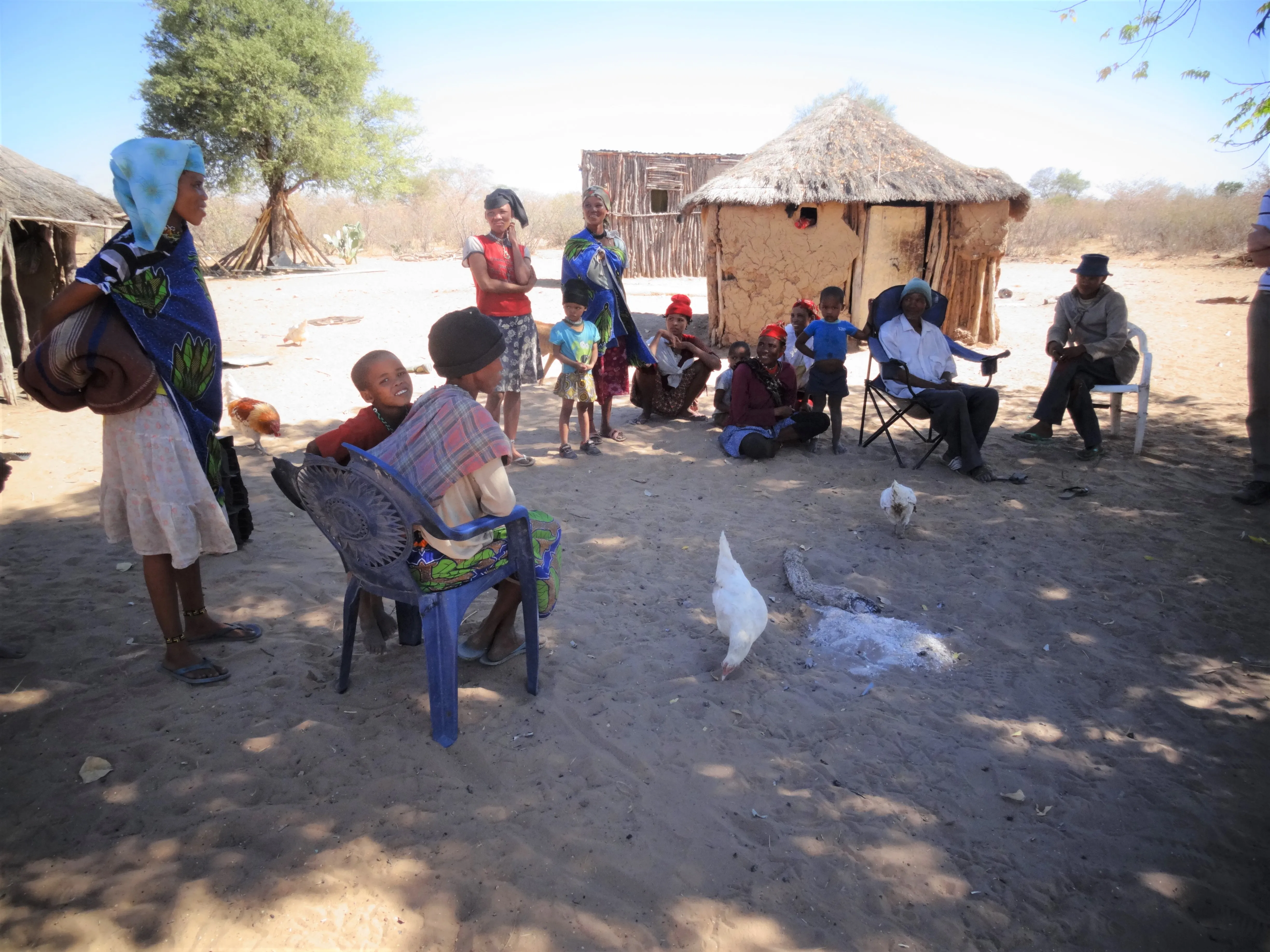
After studying the Kalahari Bushmen, it is impossible to view the world the same way I did before. Recent DNA evidence has shown them to be the oldest human lineage on Earth: they lived and thrived in Southern Africa for over 200,000 years. Will our own civilization last as long?
The fact that it is so easy to romanticize the Bushmen lifestyle tells us more about ourselves than about them.
For me, their story is a many-faceted mirror. It shows us that human flourishing and harmony with nature can coexist. It shows that our modern lifestyle is not the default. That freedom from limitations — the stated goal of all technological progress — does not guarantee human well-being, and may in fact create more chaos and misery than the thing it replaced. It shows us who we may once have been. And it shows us what we sacrifice as we claw our way to the stars.

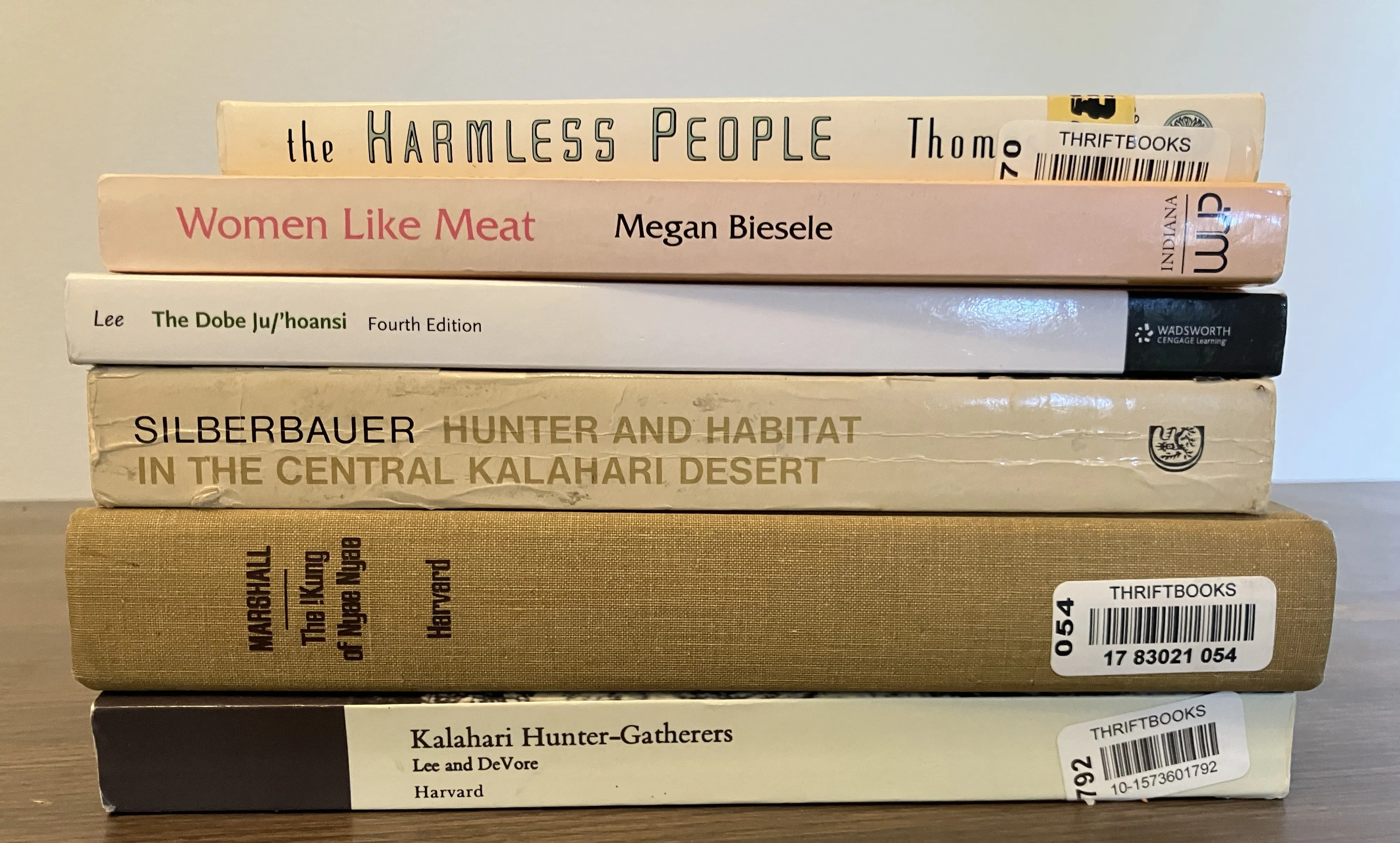
If you want to learn more:
-
The Harmless People, by Elizabeth Marshall Thomas
-
The Dobe Ju/’hoansi by Richard B. Lee
-
Films by John Marshall. You can find these at your library’s online portal, or via library streaming service Kanopy. There’s also a few around online like the award-winning Bitter Melons.
The Kalahari peoples are still struggling to find economic stability and recognition. If you are interested in supporting them, the Kalahari People’s Fund and Survival International have done a lot of good work and are actively seeking donations for future projects.
Footnotes
-
It depends on who you ask. There is no single agreed upon term and no single way to refer to this diverse and varied group of peoples that had no concept of nationhood. Bushmen comes from the Dutch colonial period and is used in most of the early academic literature. Many still use that term to refer to themselves. The term ‘San’ was later adopted but that also originated as a pejorative used by some of their sedentary neighbors to refer to people who had no cattle. I will refer to individual groups by name where possible. ↩
-
The symbols /, //, ! and ≠ represent different types of clicks. They can be omitted for simplicity. Ju/hoansi for example can be said like ‘zhu-wah-si’ ↩